Imported EVs Face 35% Tax From 1 January: What Hua Hin Buyers Should Know
Thailand's Cabinet will lift excise tax on imported battery EVs from 10% to 35% on 1 January 2027. Lenders expect a year-end rush, and one carmaker executive warns of price rises of up to 10%.
If you are weighing an electric car for the Bangkok to Hua Hin run, the calendar just started working against you. On 3 November the Cabinet agreed to raise excise tax on certain imported electric vehicles to 35% from 1 January 2027, The Nation reports. That leaves about six weeks to buy at the current rate, and lenders are already planning for the rush.
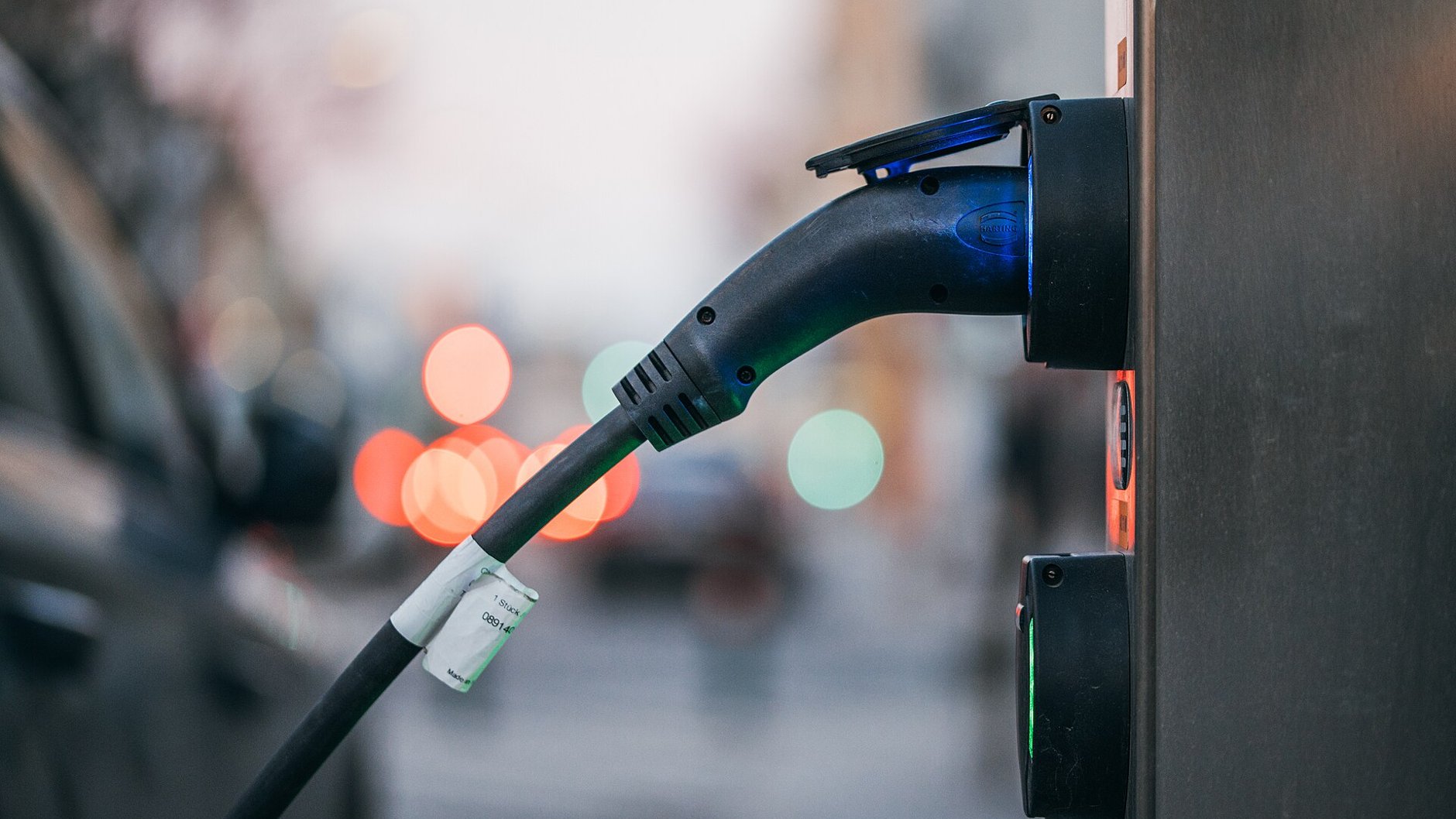
The change reaches Hua Hin through its drivers. Weekenders and second-home owners make the roughly 200 km drive from the capital. The general manager of Holiday Inn Vana Nava Hua Hin made that point when the hotel installed an EA Anywhere charger in its car park, which Thaiger described as the town’s first. Anyone choosing a car for that route, or for a household based here, is now choosing it against a tax deadline.
What changes, and for whom
The new rate applies to imported battery electric vehicles (BEVs), now taxed at 10%, and imported range-extended electric vehicles (REEVs), now taxed at 15%. Excise Department director-general Pornchai said the measure targets imported cars that have no domestic production and use no locally made parts, according to The Nation. Both rates go to 35%, a Pattaya Mail report confirms, citing Finance Minister Ekniti Nitithanprapas.
Electric vehicles built in Thailand keep the existing 2% rate, The Nation says in a second report. The same report names Tesla, Volvo, Porsche and Audi as brands without Thai production plans that are expected to be exposed. Leapmotor says it intends to start Thai production in 2027, while XPeng is studying a factory with no timetable.
| Vehicle type | Excise tax now | From 1 Jan 2027 |
|---|---|---|
| Imported BEV, no Thai production or parts | 10% | 35% |
| Imported REEV, no Thai production or parts | 15% | 35% |
| EV built in Thailand | 2% | 2% |
The reports say nothing about conventional hybrids, which are not part of this decision. Nor is it settled how import quotas will work for carmakers that invest in Thailand and want to keep today’s rates on eligible imports. The Nation says the allocation framework is still unresolved, so a brand’s final exposure may differ from the headline.
What it could cost
The jump is 25 percentage points, but the sticker price will not rise by that much. A senior executive at a Chinese carmaker, who was not named, told The Nation some imported models could become up to 10% more expensive. On certain cars that means tens or hundreds of thousands of baht. The executive said the company accepted the policy.
For scale, an earlier Asia News Network report used a ministry source’s example of a one-million-baht vehicle: at 10% the excise is about 100,000 baht. That example assumed a 30% rate. At the final 35% the same arithmetic gives 350,000 baht, or 250,000 more, though the taxable value is not the retail price and carmakers can absorb part of the rise.
The year-end rush
Lenders expect people to move first. TTB Drive says demand for car loans in the fourth quarter should be 30–40% above the third quarter, against the usual 20% lift from the year-end Motor Expo, Pattaya Mail reports. Its own new hire-purchase loans for passenger EVs grew 133% in the first nine months of 2026, and EVs made up 44% of its new passenger-car approvals.
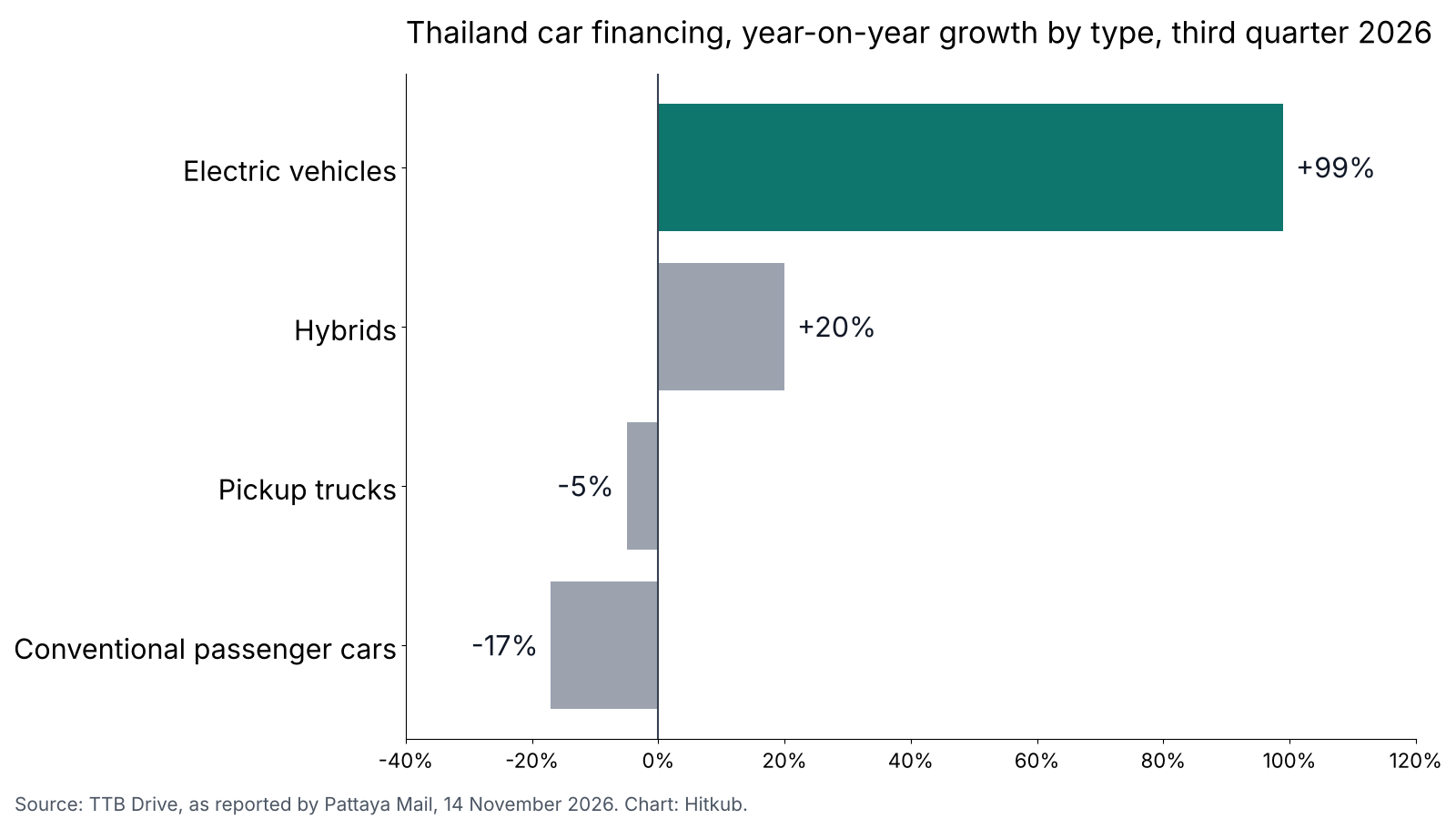 Chart: Hitkub. Market-wide financing growth by vehicle type, third quarter 2026, from TTB Drive figures reported by Pattaya Mail.
The chart shows how lopsided the market already was before the tax. Across the whole market, EV financing rose 99% by the third quarter while conventional passenger-car financing fell 17%, TTB Drive says. The bank projects that hybrid, plug-in and battery cars together will reach 61% of registrations in 2026, up from 6% in 2021. It expects total sales of 670,000 to 700,000 vehicles this year.
What to do before 1 January
If you want an imported EV, ask the dealer which excise category the exact model falls into. Also ask when the car will be registered. No report says whether the new rate follows the order date, the delivery date or the registration date. Ask whether the brand plans Thai assembly, since that decides which rate you face next year. Local charging is also worth checking now, rather than after delivery.
The cost does not stop at purchase. TTB Drive expects about 279,000 EVs to be at least three years old in 2027, with 10,000 to 25,000 of them reaching the used market. That is roughly 2,000 cars a month worth about one billion baht, which could soften used prices just as new imports get dearer. No source yet says how resale values will move, and the quota rules still have to be published.
— End of article —