A Second Kui Buri Gaur Is Found Drowned in an Irrigation Canal
A roughly 800 kg bull gaur was pulled from a canal in Sam Roi Yot on Wednesday, the second to turn up in an irrigation channel in under a month. Vets suspect drowning and have sent tissue samples for testing.
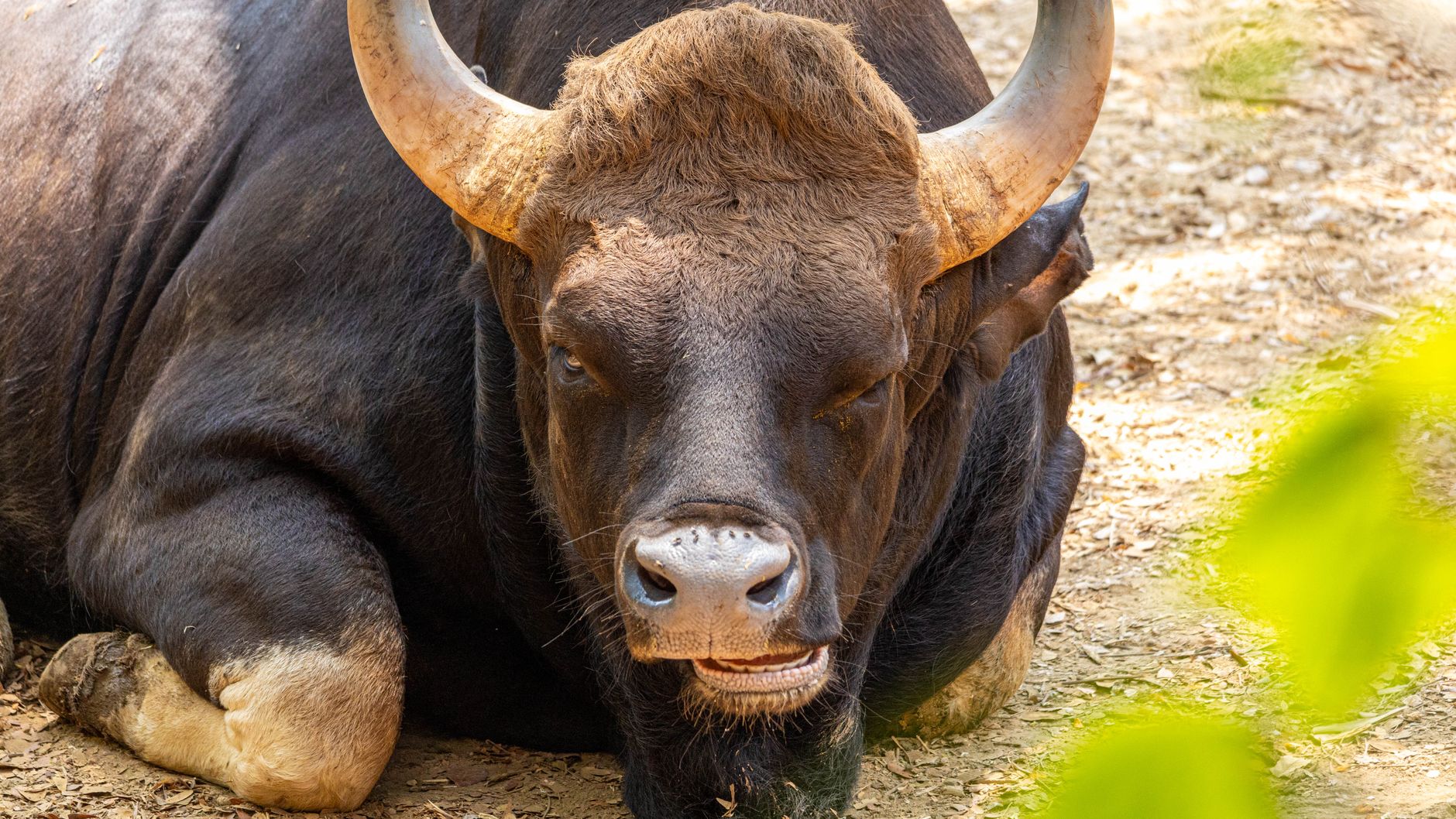
A bridge over an irrigation canal at Ban Thung Klet, in Sala Lai subdistrict of Sam Roi Yot, is where villagers spotted something very large floating on Wednesday. It was a dead bull gaur, the wild cattle that Kui Buri National Park is known for, caught against the bridge head south of Pran Buri. The animal was outside the park boundary, in farmland and canal country. It is the second gaur found dead in an irrigation channel in this part of Prachuap Khiri Khan in less than a month.
What the vets found
Park officials and vets from the Huai Sai wildlife breeding station lifted the carcass out with a lifting truck and examined it on 11 November, Banmuang reports. The station belongs to the Phetchaburi branch of Conservation Area Management Office 3. It was a solitary bull of about 8 to 15 years, weighing roughly 800 kg, and had been dead for no more than a day.
The post-mortem was thorough for a first pass. There were no wounds on the mouth, tongue, nose or head, no sign of foot-and-mouth disease on any of the four hooves, and no marks of a fight or bruising. Officials saw no signs of lumpy skin disease, and the liver, spleen and kidneys looked normal, Khaosod reports. A metal scan found no fragments in the body.
What they did find was in the lungs, which showed pinpoint bleeding, fluid and large amounts of bloody foam in the tissue and airways, with a lot of water in the oesophagus. Vets read that as drowning. Their working theory is that the bull strayed from its herd, fell into the canal and was carried to the bridge by the current. Samples of liver, lung and heart have gone for detailed laboratory testing, and the final cause is not confirmed until those results are back. The carcass was buried in line with technical guidance in the Kui Buri National Park area, and a park officer filed a record with Sam Roi Yot police.
Two bulls in 23 days
| First case | Second case | |
|---|---|---|
| Date found | 19 October | 11 November |
| Place | Sluice gate, Ban Huai Phlap, Nong Ta Taem, Pran Buri | Bridge head, Ban Thung Klet, Sala Lai, Sam Roi Yot |
| Animal | Male, about 3 to 5 years, 700 to 800 kg | Male, about 8 to 15 years, about 800 kg |
| Suspected cause | Strayed from the park, fell into the canal | Strayed from the herd, fell into the canal, drowned |
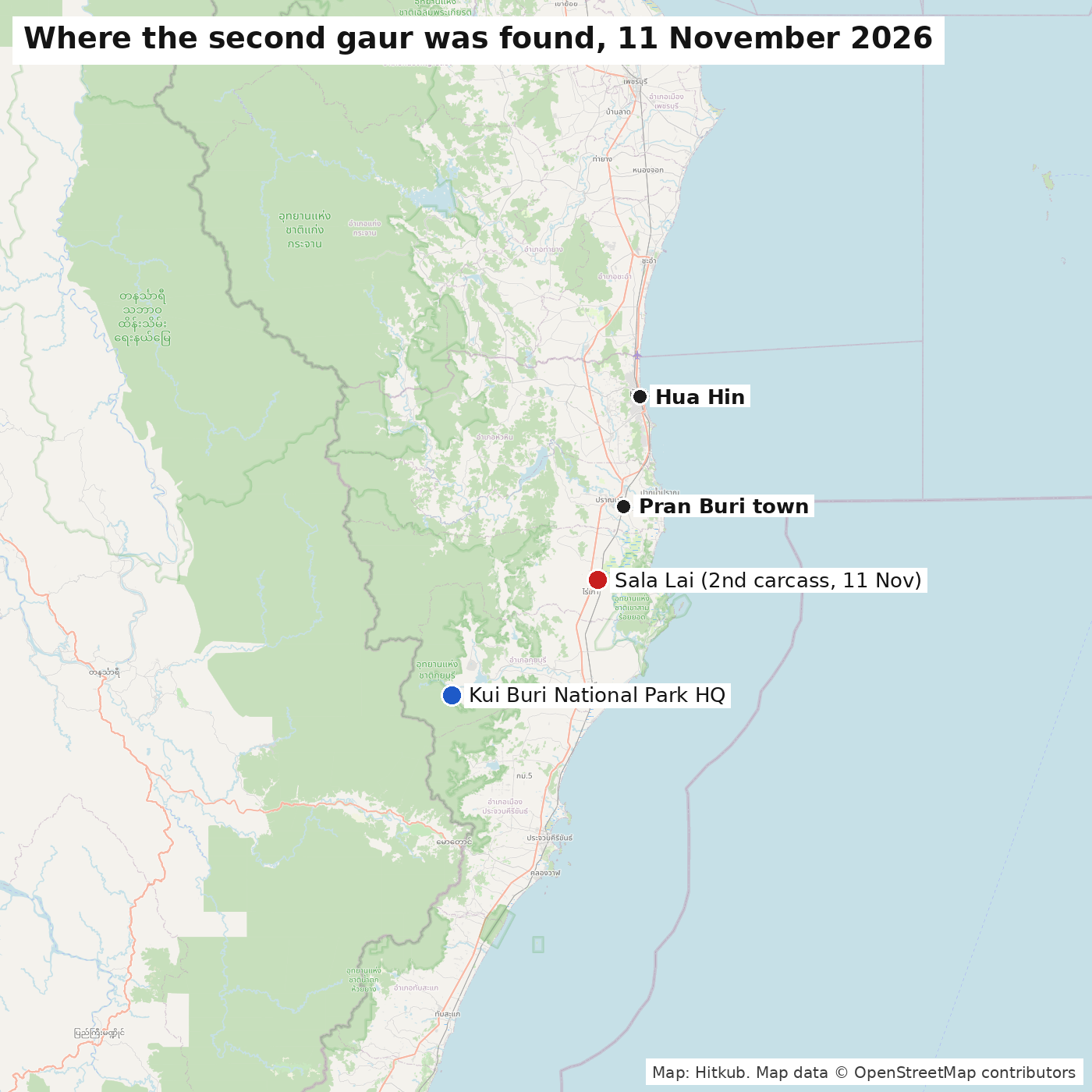 Map: Hitkub. Map data © OpenStreetMap contributors. The Sala Lai pin marks the subdistrict, not the exact bridge. The first carcass, in Pran Buri district, is not plotted because we could not confirm its location.
What happens next
The first animal was found on 19 October at a sluice gate in Pran Buri, the district immediately south of Hua Hin. It was also thought to have strayed from the park into a canal, according to Banmuang. After the second find, Khaosod says, national parks officials told Kui Buri to set measures to prevent a repeat. We found no detail yet on what those measures are, such as fencing or crossing points, and the sources do not say how many gaur live in the area. Gaur are listed as protected wildlife under a 2024 ministerial regulation, according to the official report as Khaosod relays it.
For visitors, nothing in the reports suggests any closure or change at the park. The park’s wildlife safaris centre on its elephants, which our day-trips guide covers. The lab results on the second bull are the next thing to watch, along with whatever measures the park announces.
— End of article —